The 2025 OWASP Shift: From "Bad Code" to "Broken Ecosystems"
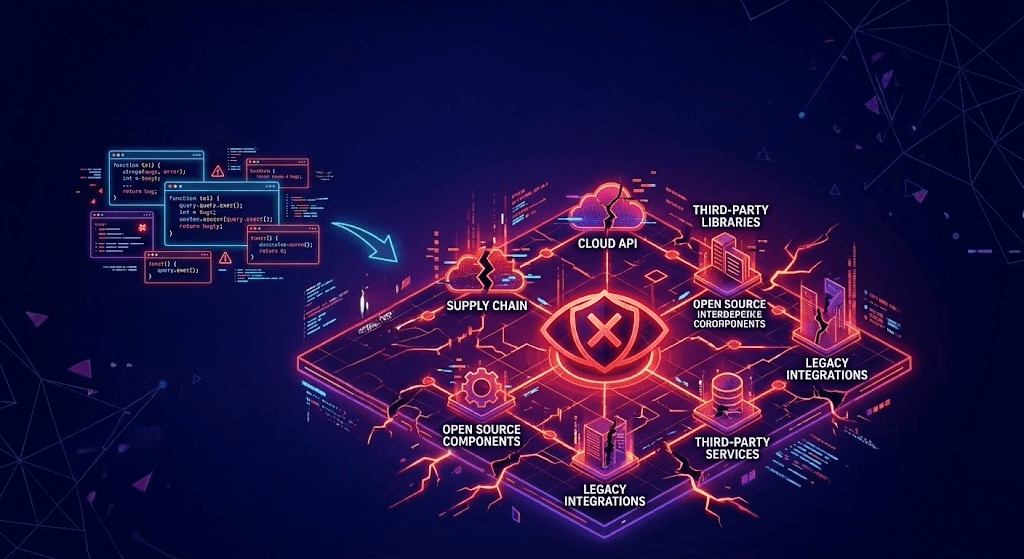
The 2026 OWASP Shift: From "Bad Code" to "Broken Ecosystems"
For years, standard Web App penetration testing followed a relatively predictable script. A developer forgot to sanitize an input field, a pentester found it, and a classic SQL injection or Cross-Site Scripting (XSS) vulnerability was born. Secure coding bootcamps taught developers how to write cleaner lines of code, and application security teams focused heavily on the perimeter.
But as we push through 2026, the threat landscape looks radically different. The Open Web Application Security Project (OWASP) Top 10 is fundamentally evolving. Today, securing your Web App is less about finding a single flaw in your proprietary codebase and far more about managing the sheer "interconnectedness" of your entire digital ecosystem.
Here is why modern Web App security has shifted from protecting isolated code to defending broken ecosystems and how your organization needs to adapt.
The Death of the Monolith and the Rise of API Chaos
Gone are the days when a Web App lived as a single, self-contained block of code on a secure server. Modern applications are essentially complex patchworks held together by APIs. Your application likely communicates with dozens of internal microservices and external third-party tools every single second.
This fragmentation has shifted the security focus. Attackers have realized that they don't need to break through a heavily guarded front door when they can exploit a broken API authentication mechanism on a minor backend service. Securing the Web App now requires absolute visibility into every data pipeline, ensuring that every API endpoint enforces strict authorization rules and doesn't inadvertently leak sensitive data to the public internet.
CI/CD Pipelines: The Ultimate Attack Vector
In 2026, the velocity of software development is faster than ever. Automated Continuous Integration and Continuous Deployment (CI/CD) pipelines allow engineering teams to push code updates to production multiple times a day. However, this speed often comes at a steep price for security.
If a malicious actor compromises a developer's credentials or exploits a vulnerability in a pipeline tool (like a malicious GitHub Action or a misconfigured Jenkins server), they don't just compromise a feature; they compromise the entire software supply chain. By injecting malicious code directly into the build process, attackers can bypass traditional codebase scans entirely. Your deployment infrastructure is now just as critical to Web App security as the code itself.
The Shadow World of Third-Party Scripts and Open Source Dependencies
When you look under the hood of a modern Web App, you will find that your in-house developers didn't even write a massive percentage of the code. Applications rely heavily on open-source libraries, frameworks, and third-party scripts for everything from analytics and payment processing to UI components.
This reliance creates an incredibly fragile ecosystem. If a widely used open-source package is hijacked by a bad actor, thousands of web applications pulling that package down automatically become vulnerable overnight. Managing modern Web App security means maintaining a dynamic, real-time Software Bill of Materials (SBOM) and constantly monitoring the third-party integrations running silently in the background of your users' browsers.
Why Legacy Vulnerability Scanners Fall Short
Because the risk has shifted from isolated "bad code" to systemic architectural flaws, legacy automated vulnerability scanners are increasingly falling short. A traditional automated tool might scan your source code and declare it "clean" because there are no obvious buffer overflows or hardcoded passwords.
What that scanner fails to see is the context. It doesn't see that an unauthenticated API can be chained together with a loose third-party script to exfiltrate user data. It doesn't spot the architectural logical flaws that modern adversaries actively hunt for. To truly protect your Web App, testing methodologies must consider the big picture of how data flows across your entire system.
Embracing Continuous, Ecosystem-Centric Penetration Testing
So, how do application security teams survive in this era of interconnected risk? The answer lies in shifting away from compliance-driven, once-a-year penetration testing and moving toward continuous, ecosystem-centric assessments.
At Red Sentry, we understand that your Web App does not exist in a vacuum. Effective modern pentesting must evaluate the application as a whole, interrogating your APIs, auditing your CI/CD pipelines, and mapping out the third-party risks threatening your perimeter. By mimicking the holistic tactics of real-world attackers, you can identify the weak links in your ecosystem before they can be exploited.
Take control of your security posture before a breach happens.
Don’t let a single broken link in your supply chain compromise your entire business. At Red Sentry, we simulate the exact multi-layered tactics modern attackers use to find the hidden vulnerabilities in your APIs, pipelines, and third-party integrations. Schedule your Web App Pentest Quote now!