Identity is the New Perimeter: Bypassing MFA in Web Apps
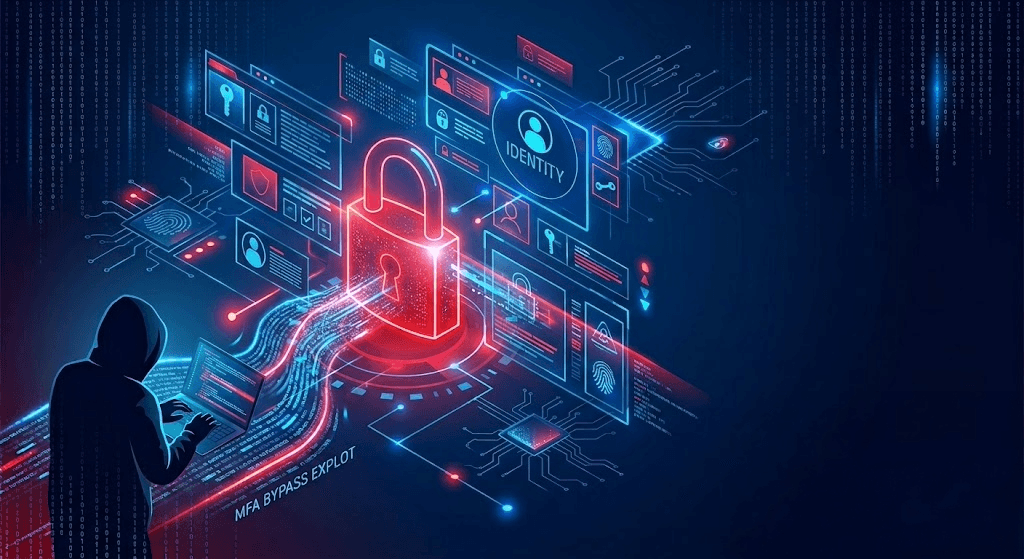
Identity is the New Perimeter: Bypassing MFA in Web Apps
For decades, the "castle and moat" strategy defined cybersecurity. If you had a strong firewall and a secure office network, your data was safe. But as digital transformation pushed services to the cloud, that moat dried up. Today, your Web App is the front door, and the key to that door isn't a physical location; it’s an identity.
Reddit’s cybersecurity communities and industry experts are echoing a singular sentiment: "Identity is where attacks start and end now." However, as organizations rush to secure identities, many fall into the trap of complacency, assuming Multi-Factor Authentication (MFA) is an impenetrable shield.
Here is why traditional MFA isn't a silver bullet and how attackers are evolving to bypass it.
Why Traditional MFA Isn't a Silver Bullet
Most organizations view MFA as the ultimate endgame for security. While it is true that MFA blocks 99% of automated bulk attacks, it is not a "set it and forget it" solution. Traditional MFA, especially SMS-based codes or simple push notifications, is vulnerable to social engineering and technical interception.
The reality is that MFA only secures the initial login event. Once the user is authenticated, the security of the Web App often shifts to session tokens. If an attacker can obtain those tokens, the "multi-factor" part of the equation becomes irrelevant.
Adversary-in-the-Middle and Token Theft
One of the most sophisticated ways to bypass MFA today is through Adversary-in-the-Middle (AiTM) attacks. Unlike traditional phishing that steals passwords, AiTM proxies the actual login page of a Web App to the victim.
When the user enters their credentials and completes the MFA challenge on the fake site, the attacker intercepts the authenticated session cookie in real-time. Because the attacker now possesses the session token, they can inject it into their own browser and bypass the login process entirely. They aren't "cracking" the MFA; they are simply riding the wave of a successful authentication.
The Mechanics of Session Hijacking
Session hijacking occurs when an attacker takes over a user's active session with a Web App. This can happen through various vectors beyond just AiTM, including:
Cross-Site Scripting (XSS): Injecting malicious scripts into a page to steal cookies.
Session Fixation: Forcing a user to use a known session ID.
Malware: Infostealers designed to scrape browser data and session caches.
In these scenarios, the Web App believes it is still communicating with the authorized user. Since the session is already established, the application rarely asks for MFA a second time, giving the attacker full access to the account's permissions.
The Rise of "MFA Fatigue" Attacks
Sometimes, the simplest bypasses are the most effective. MFA Fatigue (or "Push Spamming") involves an attacker who already has a user's password sending dozens of MFA push notifications to the victim's phone.
The goal is to overwhelm the user until they accidentally, or out of sheer annoyance, hit "Approve." This exploit relies on human psychology rather than technical flaws. It highlights why identity security must involve more than just a "Yes/No" prompt on a smartphone.
Moving Toward Phishing-Resistant Identity
If identity is the new perimeter, we must build it from stronger materials. To protect your Web App, it is time to move toward "Phishing-Resistant" MFA.
This includes:
FIDO2/WebAuthn: Using physical security keys that are cryptographically bound to the specific domain of the Web App, making AiTM attacks impossible.
Conditional Access: Implementing policies that look at device health, geographic location, and IP reputation before granting access.
Continuous Monitoring: Instead of trusting a session indefinitely, security teams must monitor for anomalous behavior after the login is complete.
Ready to Stress-Test Your Identity Security?
Stop wondering if your MFA is enough and start knowing. Our Web App pentesting services help you stay ahead of the curve by identifying complex logic flaws and authentication weaknesses that automated tools miss.